
Chrysoberyl vs Cat’s-Eye: Understanding the Difference Between These Gem Varieties
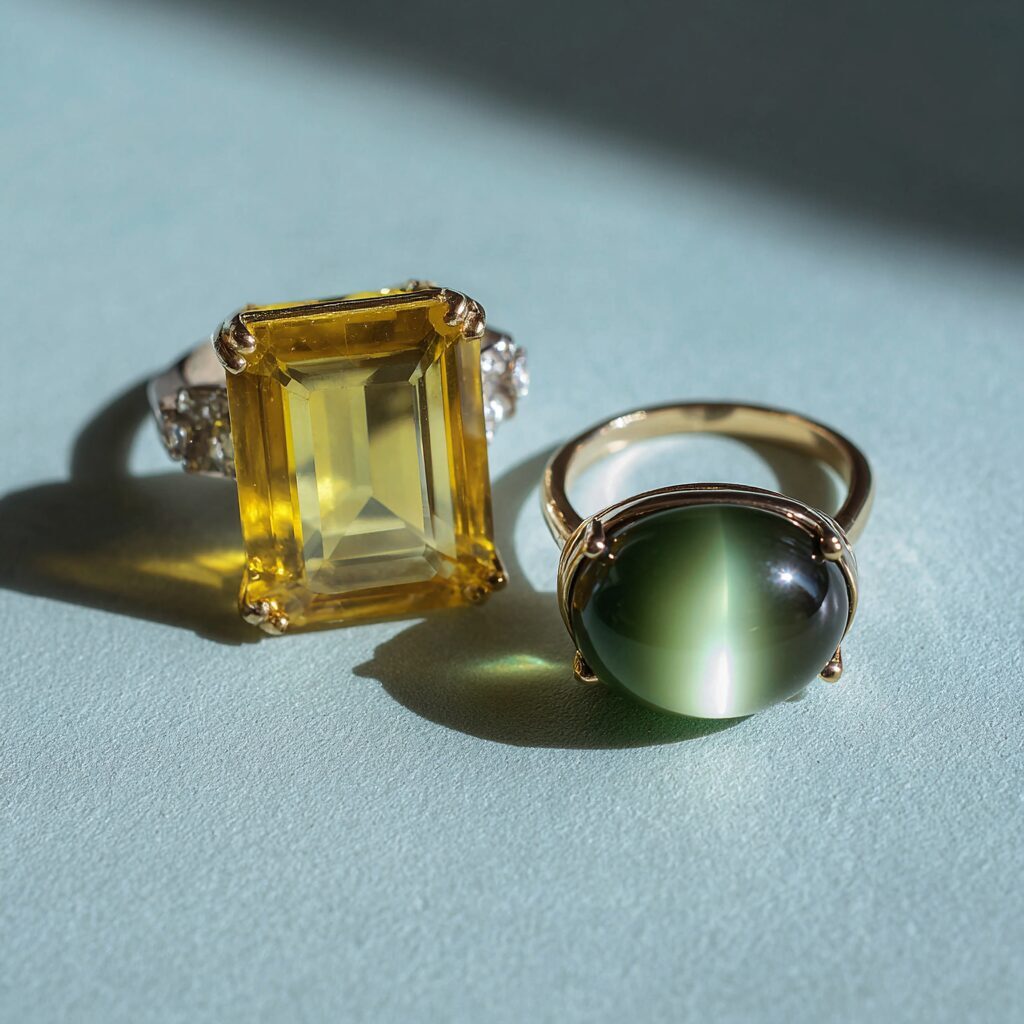
Chrysoberyl and Cat’s-Eye are closely related gemstones, yet they are often confused by buyers who assume they are identical. While both belong to the same mineral family, their appearance, value, and optical properties differ significantly. Understanding these differences is essential for gemstone collectors, jewelers, and enthusiasts who want to make informed decisions when selecting fine gemstones. Chrysoberyl in its transparent, faceted form is admired for its brilliance and durability, while Cat’s-Eye Chrysoberyl is celebrated for its striking optical phenomenon and rarity. Both varieties hold an important place in the world of colored gemstones, yet each offers something entirely unique.
What Is Chrysoberyl
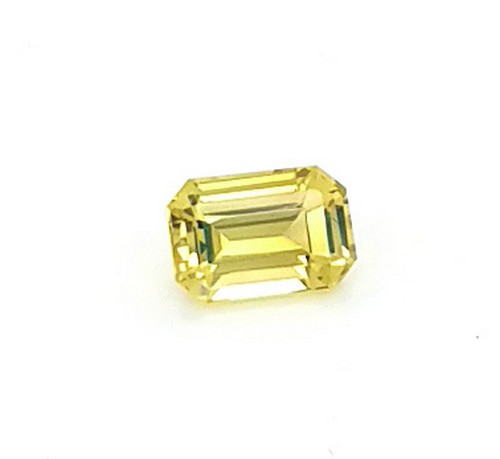
Chrysoberyl is a beryllium aluminum oxide mineral known for its durability, clarity, and attractive color range. It should not be confused with beryl, which is an entirely different mineral family. Chrysoberyl appears primarily in shades of yellow, greenish yellow, and golden honey. When cut into faceted shapes, the gemstone displays excellent brilliance and internal fire, often resembling the sparkle of peridot or yellow sapphire but with greater hardness and resilience.
The transparency of fine Chrysoberyl makes it desirable for high-end jewelry, especially rings and earrings that require a durable gemstone. With a Mohs hardness of 8.5, Chrysoberyl is exceptionally tough and suitable for everyday wear. Its affordability when compared to sapphire or diamond also makes it appealing to collectors seeking value without compromising on beauty or durability.
What Is Cat’s-Eye Chrysoberyl
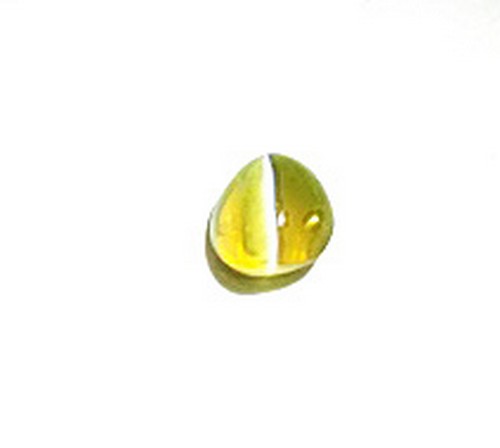
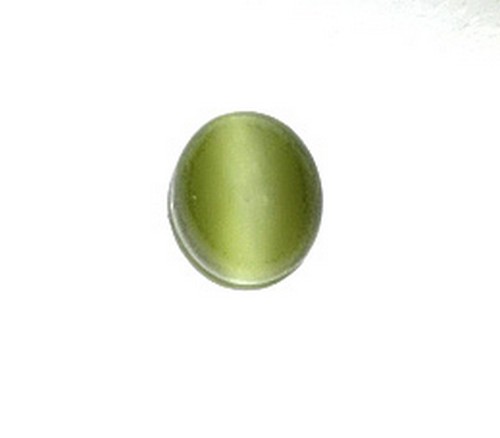
Cat’s-Eye Chrysoberyl is a rare variety of Chrysoberyl that exhibits chatoyancy. Chatoyancy is an optical effect where a bright line of light moves across the surface of a gemstone when illuminated. This effect resembles the slit eye of a cat, which gives the gemstone its name. Cat’s-Eye Chrysoberyl is considered the finest chatoyant gemstone in the world.
The silky, glowing line that appears across its surface is caused by parallel fibrous inclusions or hollow tubes within the crystal. When a cabochon is cut with proper height and symmetry, light reflects off these inclusions and forms a sharp, well-defined band. High quality Cat’s-Eye stones show a strong, centered eye that moves smoothly as the stone is rotated.
Cat’s-Eye Chrysoberyl often displays a milk and honey effect, where one side of the gem appears lighter and the other appears darker under direct light. This visual contrast enhances the gem’s beauty and is highly sought after in fine jewelry.
Color Differences Between Chrysoberyl and Cat’s-Eye
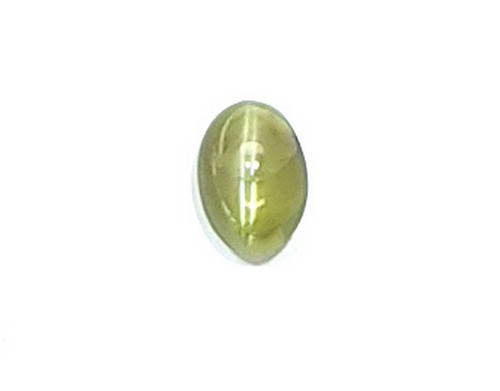
Both Chrysoberyl and Cat’s-Eye Chrysoberyl share a similar color range, but the saturation, transparency, and distribution of color often differ. Faceted Chrysoberyl typically exhibits bright, vivid colors with strong clarity. Popular hues include greenish yellow, golden yellow, and honey tones. The most valuable faceted stones show exceptional brilliance and minimal visible inclusions.
Cat’s-Eye Chrysoberyl, however, is often less transparent due to the fibrous inclusions required to produce chatoyancy. These inclusions give the gemstone a more opaque or translucent appearance. The ideal color for Cat’s-Eye ranges from golden honey to greenish yellow, with richly saturated tones commanding higher prices. Deep green Cat’s-Eye stones also exist but are far rarer.
Although both varieties share the same mineral composition, the internal structure and optical requirements of Cat’s-Eye give it a different visual personality that sets it apart from faceted Chrysoberyl.
Optical Effects: Brilliance vs Chatoyancy
The most significant difference between the two gem varieties lies in their optical behavior. Faceted Chrysoberyl displays brilliance and dispersion when cut properly. Light enters the stone and reflects internally, creating sparkle and lively flashes.
Cat’s-Eye Chrysoberyl displays chatoyancy rather than brilliance. The gemstone must be cut as a cabochon to reveal the eye, which means its surface is smooth and rounded rather than faceted. Light does not refract internally in the same way; instead, it reflects in a single concentrated band. This gives Cat’s-Eye a dynamic appearance that changes with every movement.
While faceted Chrysoberyl appeals to jewelry lovers who desire sparkle and clarity, Cat’s-Eye Chrysoberyl attracts collectors who appreciate unique optical effects and rarity.
Rarity and Value Differences
Cat’s-Eye Chrysoberyl is significantly rarer than faceted Chrysoberyl. Only a small percentage of Chrysoberyl crystals contain the parallel inclusions needed to create chatoyancy. Even among those that do, only stones with perfectly aligned fibers and suitable shape can be cut into high quality Cat’s-Eye gems. Because of this, fine Cat’s-Eye Chrysoberyl often commands higher prices per carat than its faceted counterpart.
Faceted Chrysoberyl, while less rare, still holds strong value due to its exceptional durability and attractive color. However, Cat’s-Eye stones with a sharp, centered eye and saturated color often sell for several times the price of a similar sized faceted stone. Large Cat’s-Eye gemstones over five carats are especially valuable and sought after by collectors around the world.
How to Distinguish Chrysoberyl from Cat’s-Eye Chrysoberyl
The distinction between the two is clear once you understand their structural and optical properties.
Cat’s-Eye Chrysoberyl will always display a moving line of light when illuminated. The stone is almost always cut into a cabochon rather than faceted. The body of the stone will appear more opaque or translucent, and the inclusions responsible for chatoyancy are typically visible under magnification.
Faceted Chrysoberyl lacks chatoyancy but displays high brilliance and a clean, transparent appearance. It is shaped into traditional cuts such as oval, pear, round, and cushion. If a faceted stone shows chatoyancy, it is likely another gemstone such as cat’s-eye quartz, not Chrysoberyl.
Origins of Both Varieties
Sri Lanka is the most famous source for both Chrysoberyl and Cat’s-Eye Chrysoberyl. The region produces some of the highest quality stones with warm golden tones and exceptional optical effects.
Brazil and Tanzania also produce fine material, with Brazilian Chrysoberyl often displaying more vivid greenish hues. Other origins include Madagascar, Zimbabwe, and India, though production is more limited.
Which Should You Choose
Choosing between Chrysoberyl and Cat’s-Eye Chrysoberyl depends on personal preference and intended use.
Faceted Chrysoberyl is ideal for jewelry lovers who want brilliance, durability, and vibrant color. Cat’s-Eye Chrysoberyl is favored by collectors, spiritual practitioners, and anyone drawn to gemstones with unique optical effects and rarity.
Both varieties offer exceptional beauty, but Cat’s-Eye Chrysoberyl provides a level of rarity and character that is unmatched.
Chrysoberyl and Cat’s-Eye Chrysoberyl share the same mineral family yet represent two entirely different gemstone experiences. One dazzles with brilliance, while the other captivates with its moving band of light. Understanding their differences allows buyers to fully appreciate the value, rarity, and beauty of each variety. Whether chosen for jewelry, collection, or investment, both forms of Chrysoberyl remain deeply respected and admired in the world of fine gemstones.
