


Chrysoberyl Cat’s-Eye Meaning, Value, and How to Spot One
Chrysoberyl Cat’s-Eye is one of the most intriguing and coveted gemstones in the world of fine jewelry. Its defining feature, the luminous line of light that glides across its surface, has fascinated gem collectors for centuries. Known for both its beauty and its metaphysical significance, Cat’s-Eye Chrysoberyl stands out as a gemstone with extraordinary presence, durability, and value. As the finest example of chatoyancy in nature, it carries a sense of mystery that very few gems can match. Understanding its meaning, origins, quality factors, and how to distinguish genuine stones from imitations is essential for collectors, jewelers, and anyone drawn to this rare and powerful gemstone.
The Meaning of Cat’s-Eye Chrysoberyl
Throughout history, Cat’s-Eye Chrysoberyl has been associated with intuition, protection, and clarity. Cultures across Asia and the Middle East regarded it as a talisman capable of warding off negative forces while sharpening the wearer’s awareness. The moving band of light along the surface was believed to function like a vigilant guardian that never rests. In crystal healing traditions, Cat’s-Eye is thought to stimulate discipline, insight, and emotional balance. The gemstone’s ability to reflect and concentrate light mirrors its symbolic role in focusing the mind and illuminating truth. For many, this gemstone represents a path toward inner strength, perseverance, and higher understanding.
In spiritual practice, Cat’s-Eye is said to activate the solar plexus chakra, which governs confidence, willpower, and personal identity. Some also connect it with the third eye chakra, the center of intuition and perception. This combination gives the stone a unique energetic signature that blends practicality with awareness. Whether used in meditation or worn as jewelry, Chrysoberyl Cat’s-Eye is valued for its stabilizing and protective qualities.
What Gives Cat’s-Eye Its Unique Appearance
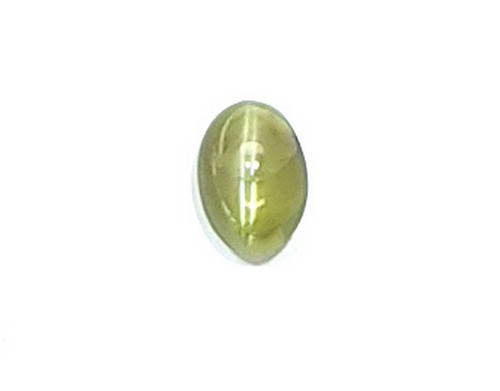
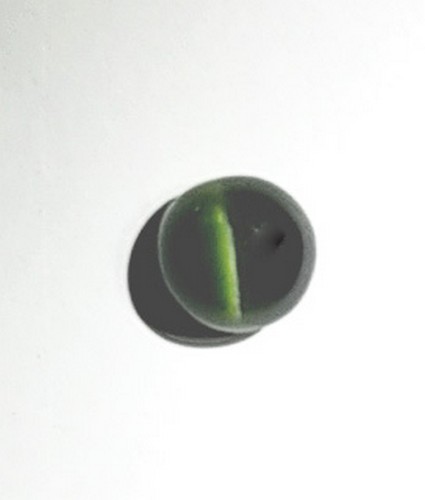
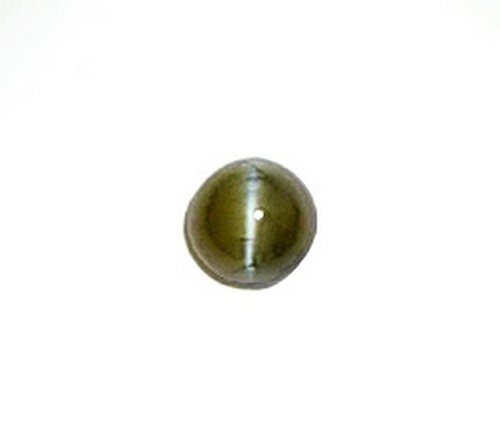
Cat’s-Eye Chrysoberyl displays the most prominent and prized form of chatoyancy found in any gemstone. Chatoyancy occurs when light interacts with parallel fibrous inclusions within the crystal. In Chrysoberyl, these inclusions are typically rutile or hollow tubelike structures that align naturally during the gem’s formation. When cut into a cabochon, light reflects along these fibers, creating the sharp, linear “eye” that appears to glide across the stone.
The quality of this eye is crucial. A strong, centered, and well-defined eye increases a gemstone’s rarity and value. High quality Cat’s-Eye stones reveal an eye that remains visible even in dim lighting and moves smoothly as the stone is rotated. Many also exhibit the highly desirable milk and honey effect. This occurs when one side of the stone appears lighter and the other darker when illuminated. The contrast accentuates the eye, giving the gem a rich and dynamic appearance.
Understanding Chrysoberyl Cat’s-Eye Value
Cat’s-Eye Chrysoberyl is among the world’s most valuable gemstones, surpassing many sapphires, emeralds, and rubies when the quality is exceptional. Several factors influence its value:
- Color: The ideal color ranges from honey yellow to golden green. Rich saturation is more valuable than pale or overly dark tones.
- Eye sharpness: The eye should be straight, bright, and distinct. A diffused or broken eye lowers value.
- Transparency: Fine stones possess a high degree of translucence that enhances the movement of the eye. Excessively opaque stones are less desirable.
- Size: Large Cat’s-Eye stones are rare. Gemstones over 5 carats with excellent chatoyancy command very high prices.
- Cut: The cabochon must be shaped precisely with proper height and symmetry. A well-executed dome allows the eye to stay centered and crisp.
Some stones also display a secondary phenomenon called asterism, where multiple bands of light intersect. These pieces are extraordinarily rare and considered collector level gemstones.
How to Identify Real Cat’s-Eye Chrysoberyl
Because of its value, Cat’s-Eye Chrysoberyl is often imitated by more common stones that also display chatoyancy, such as quartz, apatite, or synthetic glass. Knowing how to distinguish genuine Chrysoberyl is essential for both collectors and buyers.
The first characteristic to examine is the sharpness of the eye. Natural Chrysoberyl produces the world’s finest chatoyancy, with an eye that appears vivid and well defined. In imitations, the line of light is often fuzzy or uneven. The milk and honey effect is another indicator, as it is rarely seen in other chatoyant stones.
The gemstone’s hardness also provides a clue. Chrysoberyl ranks 8.5 on the Mohs scale, which makes it significantly harder than quartz or apatite. A trained jeweler can test hardness discreetly without harming the stone.
Weight can also help with identification. Chrysoberyl has a higher density than most gems that imitate it, so an authentic gem will feel heavier in the hand compared to a similar sized imitation.
The most reliable method is professional gemological testing. Reputable sellers provide certificates from labs such as GIA or IGI, confirming that the gemstone is natural Chrysoberyl and not an imitation or synthetic material.
Where Cat’s-Eye Chrysoberyl Comes From
The finest Cat’s-Eye Chrysoberyl traditionally comes from Sri Lanka, especially from the gem-rich region of Ratnapura. These stones are revered for their rich honey tones and exceptional eye sharpness. Brazil and Tanzania also produce high-quality material, with some Brazilian specimens showing a vivid greenish hue that is prized among collectors. Smaller deposits exist in India, Madagascar, and Zimbabwe, although production from these regions is limited.
Each origin brings subtle differences in color, clarity, and inclusion patterns. Sri Lankan stones tend to offer the classic golden honey tones, while Brazilian stones often display stronger greenish hues. Tanzanian material is known for its intense saturation and dramatic chatoyancy.
Why Chrysoberyl Cat’s-Eye Remains Highly Collectible
Chrysoberyl Cat’s-Eye holds a prestigious position in the gemstone world due to its rarity, durability, and optical beauty. Unlike many other gemstones that can be found in a wide array of locations or that exist in large quantities, Cat’s-Eye Chrysoberyl is produced only in specific geological settings. This limited availability elevates its value and ensures strong long-term demand.
Collectors admire it for its unique visual excitement. No other gemstone displays chatoyancy with such clarity and movement. Jewelers value its hardness and stability, which make it suitable for everyday wear. Spiritual practitioners appreciate its symbolism and energetic strength.
Because high quality Cat’s-Eye gems are becoming harder to source each year, the gemstone is increasingly seen as a strong investment piece. Stones with exceptional eye sharpness, ideal color, and significant size often appreciate over time.
Chrysoberyl Cat’s-Eye is a gemstone that stands apart in beauty, symbolism, and rarity. Whether admired for its visual brilliance, sought for its protective symbolism, or collected for its investment potential, Cat’s-Eye Chrysoberyl remains one of the finest and most fascinating gems ever discovered. Consider a Chrysoberyl Cat’s-Eye for a stunning custom pendent necklace, ring, or earrings. Click to shop our collection of premium natural loose Chrysoberyl Cat’s-Eye.
