
How to Identify Real vs. Fake Moldavite
Moldavite is one of the most mysterious and sought-after gemstones in the world, prized for its extraterrestrial origin and deep green beauty. But because of its popularity, fake Moldavite has flooded the market making it essential for buyers to know how to identify real vs fake Moldavite.
Real vs Fake Moldavite
Moldavite is a form of tektite created about 15 million years ago when a meteorite struck the region now known as the Czech Republic. The intense heat and pressure from that impact melted surrounding terrestrial rocks, launching molten glass into the air. These droplets solidified as they fell back to Earth, creating what we know today as Moldavite.
Because of this rare cosmic formation, genuine Moldavite has distinct characteristics that are nearly impossible to replicate perfectly. Counterfeiters, however, have become skilled at producing convincing glass imitations, often selling them as authentic pieces. These fakes are usually mass-produced in China or Thailand, lacking the geological and visual traits of genuine Czech Moldavite.
Understanding the differences can save you from disappointment and ensure your gemstone is a true piece of Earth’s cosmic history.
How to Tell If Moldavite Is Real
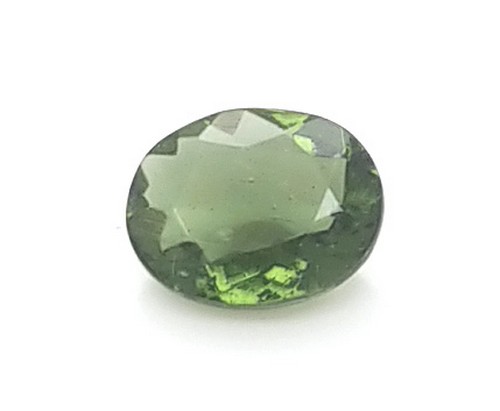
Authentic Moldavite possesses several features that set it apart from glass imitations. When examining a stone, focus on the texture, color, and internal structure. Even a novice can learn to recognize these cues with a bit of practice.
1. Texture and Surface Pattern
Real Moldavite typically has a natural, etched surface texture caused by erosion and weathering over millions of years. These irregular grooves and ripples—sometimes called “sculpting”—give each stone a one-of-a-kind appearance. Fake Moldavite often looks too smooth or uniformly patterned, like molded glass.
2. Color Variations
True Moldavite ranges from mossy green to olive and sometimes brownish-green. The color is usually uneven, with light and dark patches visible when held up to the light. In contrast, fake Moldavite often has a bright or neon green hue, evenly distributed throughout the piece.
3. Internal Bubbles and Inclusions
Genuine Moldavite may contain small air bubbles and flow lines from its molten origin, but they appear randomly distributed and irregular. In fake Moldavite, bubbles are often round, uniform, or aligned in streaks—an indicator of artificial glass production.
4. Weight and Temperature
Real Moldavite feels lighter than it looks and warms quickly in your hand because of its silica composition. Glass replicas are heavier and take longer to warm up, sometimes feeling slightly denser to the touch.
5. Origin and Source Documentation
Most authentic Moldavite comes from the Bohemian region near the Moldau River in the Czech Republic. If a seller cannot verify the stone’s origin or claims it is from a different country, that’s a strong red flag. Always ask for source details or certificates of authenticity when available.
Fake Moldavite Guide

Fake Moldavite comes in several forms, and learning to recognize these can protect you as a buyer or collector. Most counterfeits are made from colored glass or resin designed to mimic Moldavite’s green tone and surface texture.
Common types of fake Moldavite:
• Molded glass imitations: These are often created using green bottle glass melted and poured into molds to replicate the natural texture. They can look realistic at first glance but lack the intricate surface detail and depth of genuine stones.
• Dyed glass: Some fakes begin as clear glass pieces that are chemically dyed or coated to achieve the green hue. Over time, the color may fade or appear uneven.
• Pressed or machine-carved glass: Factories can now carve convincing patterns into glass, but under magnification, the lines appear repetitive or too uniform.
• Synthetic tektite blends: Some manufacturers mix glass with small amounts of natural tektite fragments to imitate Moldavite’s authenticity. While technically part natural, these are not genuine Moldavite stones.
When purchasing, beware of listings that use vague descriptions such as “meteorite glass,” “Czech-style tektite,” or “impact stone.” Genuine Moldavite will always be labeled as such, with clear indication of its Czech origin.
Authentic Moldavite Czech Republic

The Czech Republic remains the only verified source of true Moldavite. Specifically, deposits are found in South Bohemia and Moravia, with the highest quality stones coming from the region near Besednice. These pieces are treasured for their deep green hue and intricate fern-like surface texture.
Authentic Czech Moldavite is mined under strict regulations to preserve both geological integrity and consumer trust. Most legitimate dealers obtain their stones directly from these regions or through certified distributors. If your Moldavite is labeled as “Czech Moldavite,” you should expect the following characteristics:
- Color: Natural forest to olive green, occasionally with brownish tones.
- Texture: Naturally etched or pitted, never perfectly smooth.
- Transparency: Slightly translucent with visible internal swirls or streaks when held up to light.
- Provenance: Accompanied by documentation or verified source information.
Many buyers are surprised to learn that Moldavite is becoming increasingly scarce. With legitimate mining sites dwindling and strict export rules in place, authentic Moldavite has become a collector’s gemstone. Its rising value has fueled a wave of counterfeit sales, making verification even more crucial.
How to Buy with Confidence
If you plan to purchase Moldavite online or through a gemstone dealer, there are several ways to protect yourself.
- Buy from sellers who specialize in Czech Moldavite rather than general crystal shops. Look for high-resolution photos that show texture and color variations under different lighting conditions. Genuine Moldavite often appears slightly duller in indoor light but glows beautifully under natural light.
- Price can also be a strong indicator. Authentic Moldavite is rare, and large or high-quality specimens can command significant prices. If a listing seems too cheap for its size or clarity, it likely isn’t real. Small, authentic pieces may start around $50, while museum-grade specimens can reach hundreds or even thousands of dollars.
- By learning to distinguish the genuine from the imitation—through color, texture, inclusions, and origin—you can confidently purchase Moldavite that carries both authenticity and lasting value. Always look for Czech provenance, ask questions about sourcing, and trust your intuition when something feels off.
Whether you are a collector, a crystal enthusiast, or simply someone drawn to the beauty of this otherworldly gem, understanding how to identify real Moldavite will ensure that your stone truly carries a piece of the cosmos within it. Shop our collection of real Moldavite by clicking HERE.
