Zircon vs. Cubic Zirconia – The Gemstone Misunderstanding
When shoppers search for sparkling gems, zircon and cubic zirconia often appear side by side, creating confusion. Their names sound nearly identical, yet they represent two very different materials. Zircon is a natural gemstone that has formed over billions of years, while cubic zirconia is a man-made diamond substitute created in laboratories. This misunderstanding has caused zircon to be overlooked, even though it is one of the most brilliant and collectible gems in the world.

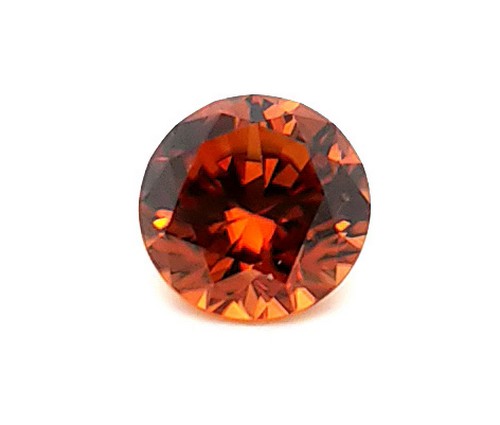
The Difference Between Zircon and Cubic Zirconia
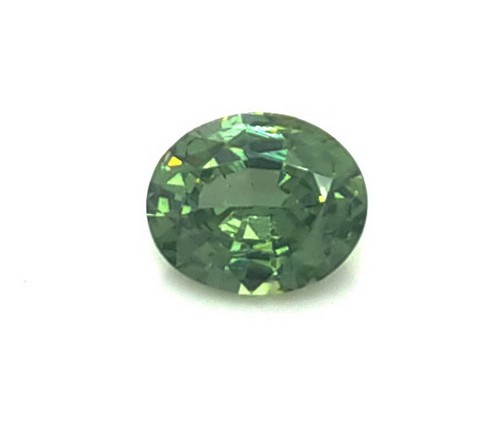
The most important difference lies in origin. Zircon is a natural mineral found in countries such as Cambodia, Sri Lanka, and Australia. Some zircon crystals are among the oldest materials on Earth, dating back more than four billion years. It is admired for its exceptional brilliance and range of natural colors, from vivid blue and green to pink, yellow, and even colorless stones that can resemble diamonds.
Cubic zirconia, by contrast, is not a natural gemstone at all. It was developed in the 1970s as a synthetic material meant to imitate diamonds at a low cost. Although it can look appealing when first purchased, cubic zirconia lacks the geological history, rarity, and enduring value that make zircon special. Over time cubic zirconia can become cloudy or scratched, while zircon retains its brilliance when properly cared for.
Why The Confusion with Zircon and Cubic Zirconia
The confusion between zircon and cubic zirconia comes mainly from their similar names. Many buyers assume they are related, when in fact they are completely different. Zircon is sometimes marketed poorly, leading people to mistake it for a cheaper imitation. Jewelers who do not emphasize the distinction may unintentionally add to the misunderstanding.
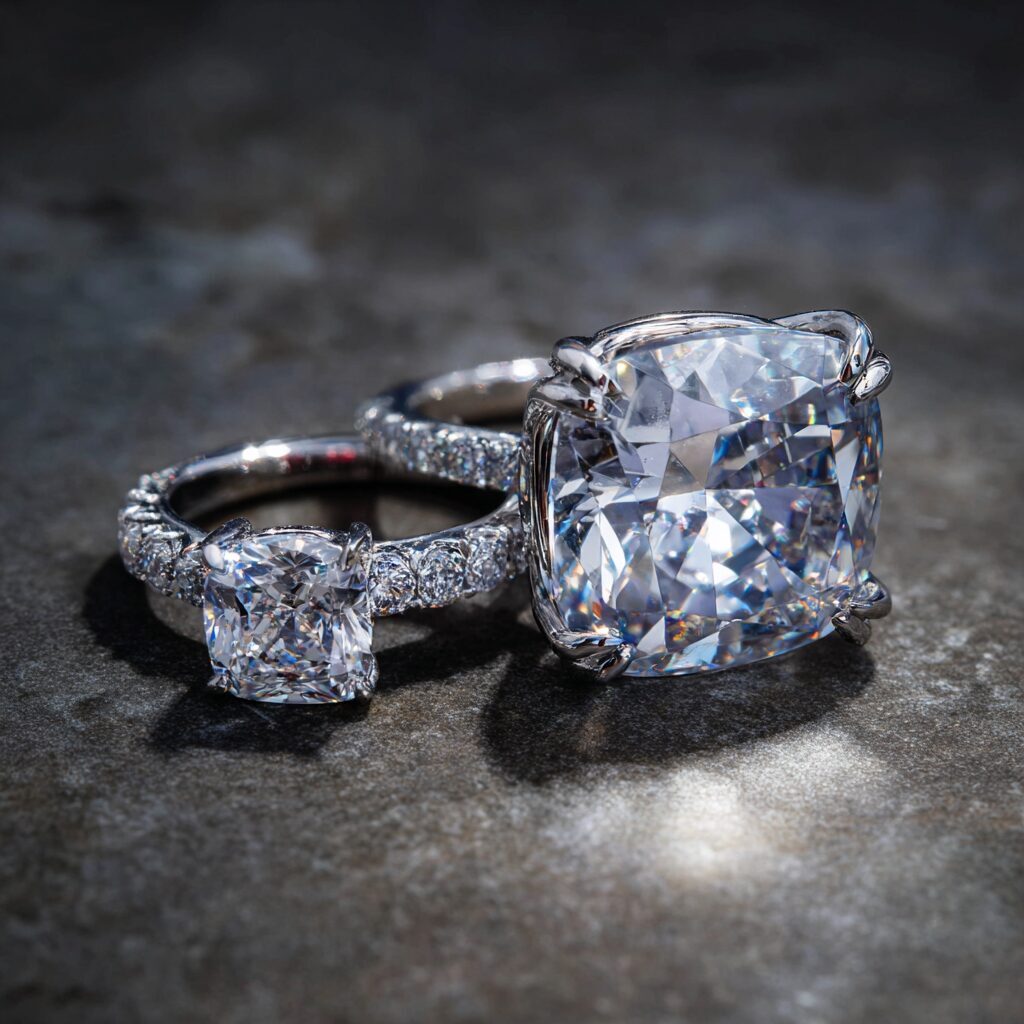
There is also the visual factor. Colorless zircon can appear strikingly similar to a diamond, and cubic zirconia is also designed to mimic that same look. This shared resemblance to diamonds has blurred the lines in buyers’ minds, leaving zircon unfairly associated with an inexpensive synthetic stone rather than appreciated as the natural gemstone it truly is.
How to Tell the Difference
For those unsure whether they are looking at zircon or cubic zirconia, there are several ways to tell them apart. Zircon has a noticeably higher brilliance and dispersion, producing flashes of colored light that give it a fiery sparkle. Under magnification, zircon often shows natural inclusions, whereas cubic zirconia is typically flawless because it is lab-made. Zircon also feels heavier in the hand due to its higher density, while cubic zirconia tends to feel lighter by comparison.
Jewelers can perform simple tests, such as checking refractive index or using a polariscope, to confirm the identity of the stone. For everyday buyers, the easiest signs are zircon’s depth of color, natural character, and fire compared to the more uniform appearance of cubic zirconia.
Why It Matters for Jewelry Buyers
Understanding the difference between zircon and cubic zirconia is essential for anyone purchasing jewelry. Zircon is a genuine gemstone with rarity, geological significance, and long-term value. It offers incredible brilliance and a wide variety of colors, making it versatile in both fine jewelry and gemstone collections. Collectors and buyers often seek zircon because it delivers exceptional sparkle at a fraction of the price of diamonds, while still being natural and valuable.
Cubic zirconia serves a different purpose. It is widely used in fashion jewelry or as a temporary placeholder in ring settings because it is inexpensive and easy to replace. Buyers who know the difference can set their expectations correctly. Someone looking for a natural gem that will hold its beauty and value should choose zircon, while someone wanting a low-cost option for everyday wear may find cubic zirconia appealing.
Zircon as a Rare and Collectible Gemstone
Though they are often confused, zircon and cubic zirconia occupy very different places in the world of gems. Zircon is a rare, ancient, and naturally brilliant stone with real significance in the jewelry market. Cubic zirconia is a synthetic alternative, useful for affordability but not comparable in value or prestige.
For anyone searching for sparkle with substance, zircon jewelry is an extraordinary choice. Its history, fire, and range of colors make it far more than a substitute. Zircon deserves recognition as a gemstone in its own right, distinct from cubic zirconia and celebrated for the qualities that make it truly timeless.
